
Borrowing from Sport Psychology: How to Calm Your Nerves Before a Grant Interview
There is a particular kind of silence that arrives just before a high-stakes interview. Your notes are open on the desk. You have rehearsed answers to competency questions. You know your proposal inside out. And yet your body seems to have received entirely different instructions. Your heart rate climbs. Your breathing becomes shallow. Your mouth dries out. Suddenly, your carefully prepared examples disappear into the fog somewhere behind your forehead.
Most people interpret this as evidence that they are not ready.
Sport psychologists would disagree.
Elite athletes experience exactly the same physiological responses before competition. The racing heart, sweaty palms, tightened chest, and looping thoughts are not signs that something is wrong; they are signs that your nervous system has recognised that something important is about to happen. The problem is rarely the presence of nerves themselves. The problem is whether you know how to regulate them.
This is where techniques from sports psychology become unexpectedly useful for professional life.
Athletes do not simply “try to calm down” before performance. They train specific psychological and physiological tools that help them regulate attention, control arousal levels, and remain task-focused under pressure. Increasingly, these same approaches are being used in leadership coaching, executive performance work, and interview preparation because the underlying challenge is remarkably similar: performing well while being evaluated[1].
The good news is that you do not need an Olympic training programme to benefit from them.
Your Body Often Decides Before Your Mind Does
One of the most useful insights from sports psychology is that performance anxiety is not “just mental”. It is physiological.
When you perceive threat, uncertainty, or high stakes, your nervous system activates a stress response. Your breathing speeds up, muscles tense, heart rate increases, and your attention narrows. In evolutionary terms, this system is incredibly useful if you are escaping danger. It is somewhat less useful when you are trying to answer a question about your leadership attributes in a panel interview.
Many people attempt to think their way out of this state:
- “Calm down.”
- “Stop panicking.”
- “Don’t mess this up.”
Unfortunately, cognition is often the first thing compromised when stress escalates.
This is why sports psychologists frequently work “bottom-up” rather than “top-down”. Instead of beginning with thoughts, they begin with physiology, especially breathing. Controlled breathing patterns can activate the parasympathetic nervous system, helping the body shift from threat mode into a more regulated state[2].
Importantly, this does not mean becoming sleepy or passive. High performers do not aim for zero adrenaline. They aim for an optimal level of arousal: alert, focused, and composed rather than frantic.
That distinction matters.
Box Breathing: The “Reset” Technique
One of the most widely used techniques in performance psychology is box breathing.
It is simple enough to do discreetly in a waiting area or before joining a video interview[3].
The structure is straightforward:
- Inhale for 4 counts
- Hold for 4 counts
- Exhale for 4 counts
- Hold for 4 counts
Repeat for several cycles.
The rhythm creates a kind of physiological metronome. Instead of your breathing being driven unconsciously by anxiety, you deliberately impose structure onto it. This interrupts the escalating feedback loop between anxious thoughts and bodily symptoms.
There is also something psychologically useful about the counting itself. Counting occupies cognitive bandwidth that might otherwise be used catastrophically imagining failure.
In sport, athletes often use box breathing immediately before competition to maintain equilibrium: calm enough to think clearly, alert enough to perform well.
For interviews, it can be particularly effective in three moments:
- 10 minutes before entering the room
- Immediately after a difficult question
- During pauses when you feel yourself speeding up
One of the easiest mistakes interviewees make under pressure is accelerating. They speak too quickly, rush answers, interrupt themselves, lose structure and start waffling. Controlled breathing slows the entire system down and helps you to get straight to your strong points, not build up to them.
Belly Breathing: Relearning How to Breathe Properly
Stress changes where we breathe from.
Anxious breathing is often shallow and chest-based. You can usually see it in raised shoulders and tight upper chest movement. Unfortunately, shallow breathing reinforces the body’s perception that danger is present.
Diaphragmatic breathing, often called belly breathing, works differently. Instead of pulling air high into the chest, you breathe deeply into the diaphragm so that the stomach expands outward. Imagine you are an orchestral brass player about to play a long phrase!
A simple way to practise:
- Place one hand on your chest and one on your stomach
- Breathe slowly through the nose
- Aim for the stomach hand to move more than the chest hand
- Exhale slowly and fully
This type of breathing has been shown to reduce physiological stress responses and improve attentional control under pressure[4].
It is also useful because it creates a physical anchor.
Interview anxiety often involves future-focused thinking:
- “What if they ask something I cannot answer?”
- “What if I freeze?”
- “What if they do not like me?”
Belly breathing redirects attention back into the present moment and into the body itself. Sport psychologists often use this kind of grounding to stop performers drifting into outcome-focused thinking. Athletes perform best when focused on executing the next action, not obsessing about the final result. (ru.nl)
The same is true in grant interviews.
The goal is not to “win the interview” while waiting in the real, or virtual reception. The goal is simply to answer the next question well; you have zero control over what the other applicants will propose; just be the best version of you!
4-7-8 Breathing: Useful When Panic Starts Escalating
If box breathing is about balance, 4-7-8 breathing is more about down-regulation.
The structure is:
- Inhale for 4 counts
- Hold for 7 counts
- Exhale for 8 counts
The extended exhale is the important part. Longer exhalations are associated with activating calming responses in the nervous system2.
This technique is especially useful when anxiety begins tipping toward panic:
- racing thoughts
- dizziness
- breathlessness
- feeling mentally flooded
Many people instinctively breathe faster when nervous, but rapid breathing can intensify symptoms. Extending the exhale deliberately counteracts this.
That said, 4-7-8 breathing can feel surprisingly intense if you are unfamiliar with it, so it is worth practising before interview day rather than attempting it for the first time five minutes beforehand.
This is another important lesson borrowed from sport psychology: techniques only become reliable under pressure if they have been rehearsed beforehand.
Athletes do not experiment with mental routines during the Olympic final. They practise them repeatedly during training until they become automatic.
Reframing Nerves as Readiness
Perhaps the most valuable sports psychology insight is that nerves are not automatically negative. Many elite performers reinterpret anxiety symptoms as signs of readiness rather than danger.
Physiologically, excitement and anxiety are remarkably similar:
- elevated heart rate
- increased adrenaline
- heightened alertness
The interpretation matters.
If you think:
“I am nervous; therefore I will perform badly,”
the stress response intensifies.
If you think:
“My body is preparing me to perform,”
the same physiological activation becomes easier to work with.
This does not mean pretending to feel calm when you do not. It means understanding that some degree of activation is entirely compatible with performing well.
In fact, many athletes perform better with moderate levels of arousal because it sharpens concentration and energy levels1.
The aim is not emotional flatness. The aim is controlled energy. In a grant interview your passion for your subject needs to shine through clearly; after all why would a panel want to invest in something that they aren’t convinced you even believe in?
The Small Shift That Changes Everything
People often imagine confident candidates as individuals who feel no nerves. Usually, that is not true.
The difference is often that experienced performers know how to recover quickly when their nervous system spikes. They recognise the symptoms earlier, regulate them faster, and redirect attention back toward the task itself.
This is trainable.
You do not need to become endlessly positive. You do not need to eliminate anxiety completely. You simply need tools that stop your physiology from hijacking your thinking.
That is why breathing techniques remain such a central part of sports psychology. They are portable, evidence-informed, discreet, and remarkably effective under pressure. Perhaps most importantly, they remind us of something easy to forget before important interviews:
- Performance is rarely about being fearless.
- More often, it is about learning how to stay functional while your heart is beating slightly faster than usual.
Bidding for FLF round 11, ERC, Wellcome Trust, or other schemes with interviews? If you need more support than your institution can offer we have Critical Friend services for written proposals and pre-interview coaching available. The details are here: https://onlineaccess.researchinfocus.com/researchgrants
Good luck!
[1] https://www.ru.nl/en/research/research-news/why-focus-is-decisive-in-an-olympic-dream
[2] https://reachpsych.com/blog/pre-game-routines-that-work-focus-cues-breathing-self-talk-and-consistency-under-pressure
[3] https://www.uclahealth.org/news/article/breathing-and-brain
[4] https://owl-tarantula-sjs6.squarespace.com/blog/sharpening-mental-focus-under-pressurenbsptools-for-elite-athletes
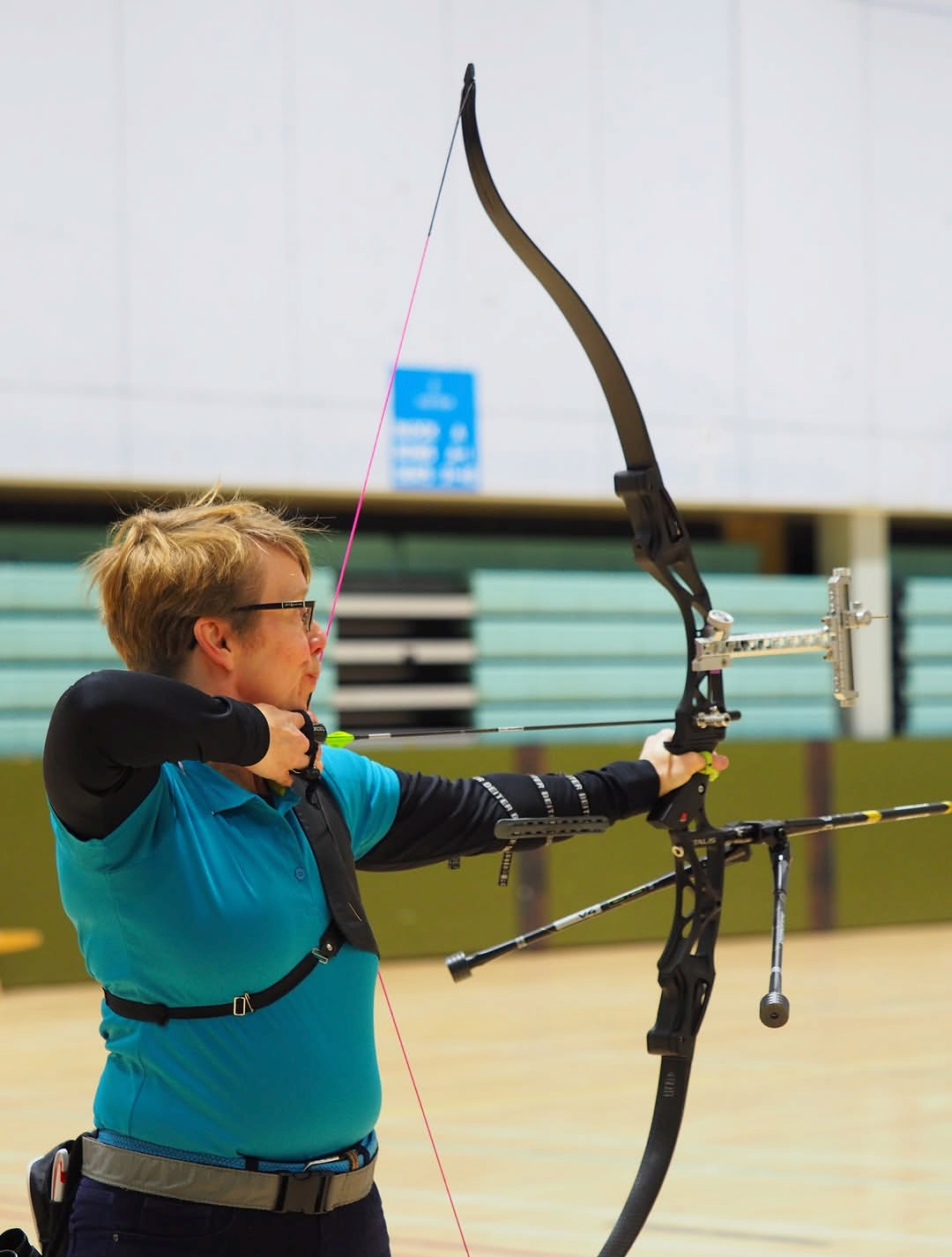
Becky, 12 shots away from claiming the Masters age group UK record for the World Archery 25m round, January 2026.

